

Every superhero story features three acts. In the first, the hero discovers their powers. In the third, they wield those powers to save the world. But it's often the second act that's the most fun. That's where the hero struggles to comprehend their abilities and runs into a few walls -- or some foolish Heisman Trophy voters -- before ultimately finding their footing and emerging triumphant, ready for battle.
Larry Fitzgerald is not, technically, a superhero, but there were so many awe-inspiring moments during his 17-year NFL career -- a career for which he'll be inducted into the Pro Football Hall of Fame (noon ET on ESPN) -- that he certainly seemed like one. From the brute strength he used to wrestle balls away from DBs to his uncanny ability to contort his body in ways that baffled defenders to the countless moments in which he lifted a team on his back, Fitzgerald was unlike any receiver the NFL had seen before.
But before Canton, he had to master his art form. For two years at Pitt, he crafted his game, and in the process, he earned the respect of numerous future NFL stars, set receiving records, nearly won a Heisman and gave the world its first glimpse of a legend in the making.
Ahead of Fitzgerald's enshrinement, ESPN spoke to more than 20 teammates, coaches and opponents who witnessed his rise from a raw prospect out of Minnesota, where his father was a sportswriter and he worked as a Minnesota Vikings ball boy, to one of the greatest ever to play the game. This is Fitzgerald's second act, a college career that redefined what a wide receiver could look like.
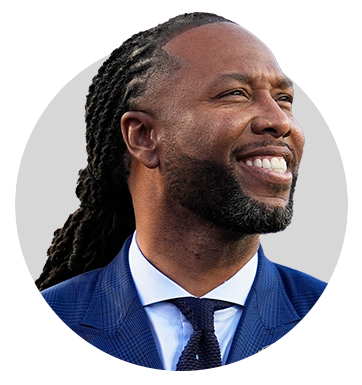 Larry Fitzgerald: I kind of fell into their lap.
 Bryan Deal, Pitt assistant, 1999-2005: I'd befriended this guy named Ed Cole, who was Larry's receivers coach in high school. He's the one that tipped us off on Larry. We didn't really recruit that area ... but I went up with Coach [Walt] Harris to watch a game, and he came out and he was head and shoulders above the next guy. He was a man among boys.
Fitzgerald: I was on my way to Penn State to visit with Joe Paterno and his staff, and a rainstorm caused the turnpike to get closed down and forced us to stay in Pittsburgh another night. And that's the reason we went to visit.
 Chris LaSala, Pitt associate AD, 1997-present: [The offense] would throw at like 7 a.m. Larry went and watched them throw and started seeing things he really liked.
Deal: Larry wasn't one, at the time, for getting out of bed, but he came and stood with [future Pitt QB] Tyler Palko, and man, did they hit it off.
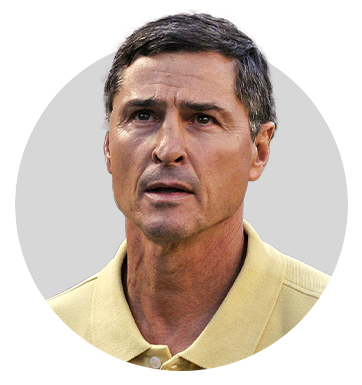 Walt Harris, Pitt head coach, 1997-2004: Larry and about 10 other kids from Larry's high school in Minneapolis were watching practice. Now our guys were playing their asses off because somebody was watching. And I think that really captured Larry.
Deal: He loved what we were doing with our wide receivers and some of the routes, and that was where he really got hooked.
Fitzgerald: Antonio Bryant was out there, and I was just really impressed with their attention to detail and focus, and that blue-collar mentality really resonated with me.
LaSala: I used to tell him stories about Antonio Bryant and he'd say, "You think Antonio's better than me." My son's name is Anthony, and to this day, Larry always says I named him after Antonio.
Before Fitzgerald's Pitt career could begin, however, he hit a roadblock. Due to academic issues, Fitzgerald had to spend a year in junior college at Valley Forge Military Academy. Several top schools cooled on him, but Pitt stayed the course. When Fitzgerald enrolled in the summer of 2002, it was clear Harris' and the Panthers' investment would pay off.
 Yogi Roth, Pitt receiver, 2000-03: Larry always had raw ability, but he didn't walk in anywhere near [a finished product]. He wasn't a route runner. He struggled coming out of breaks. He was still growing into his body. But he had the most unique body control I've ever seen.
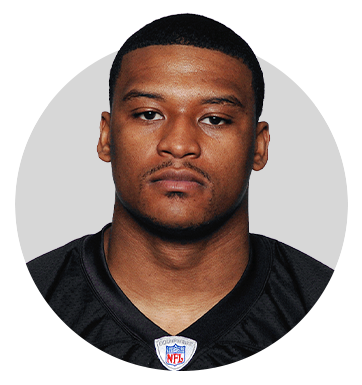 Rod Rutherford, Pitt QB, 1999-2003: His ability to track the ball over his outside shoulder -- it seems like an easy task until you try it. Go watch the catch he had at A&M where he was between three defenders, and the ball was over his shoulder, and he kind of bent back and caught it. That was stuff that Larry did on the regular that you thought, "OK, that's different."
 Tom O'Brien, Boston College head coach, 1997-2006: He had a great knack for using his body almost like a basketball player, boxing people out.
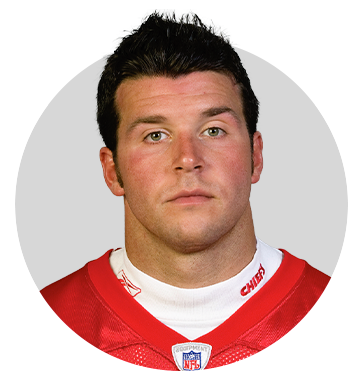 Tyler Palko, Pitt quarterback, 2002-06: He has these big mitts, and he'd just swallow the ball.
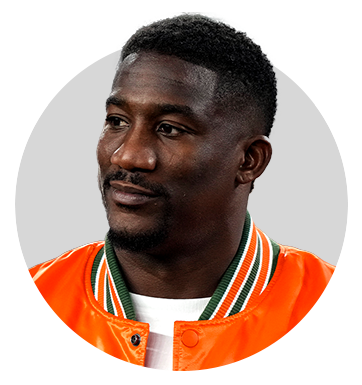 Antrel Rolle, Miami corner, 2001-04: He wasn't a blazer, but he was going to be the receiver that gave you pure hell.
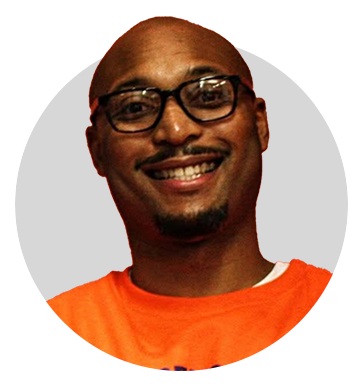 Shawn Robinson, Pitt cornerback, 2000-02: We were doing red zone [in an early practice], and I was the cornerback. I thought I had it on lock. And the only thing I remember is that Larry's tossing the ball to the ref. I'm like, "Wait, how did you catch that?" I was looking for the ball on the ground.
 Paul Zeise, Pittsburgh Post-Gazette reporter, 1998-2026: The first day in pads in training camp, they, at one point, went 11-on-11, and he made three catches in that scrimmage that were as good as any of the ones you've seen on TV. ... The last one was in the back of the end zone, a really well-placed ball, but Larry emerged out of a crowd of about four defensive backs and somehow got his hands up there and was able to get his foot in for a touchdown. It was absolutely ridiculous.
Fitzgerald: A lot of it was innate, God-given ability, but I did work on those catches a lot. I'd have a mat out or a bed or the couch [to dive onto], working on body contact and eye focus and being able to nudge guys at the point of attack to get separation when the ball was in the air without getting penalized for it.
Fitzgerald's physical ability was impressive, but it was his demeanor away from the field that set him apart.
 Rob Blanc, Pitt head athletic trainer, 1992-present: When he first came in, he was quiet, but there was something about him. I don't know how much of that was him being around the NFL as much as he was, but the way he carried himself was very different.
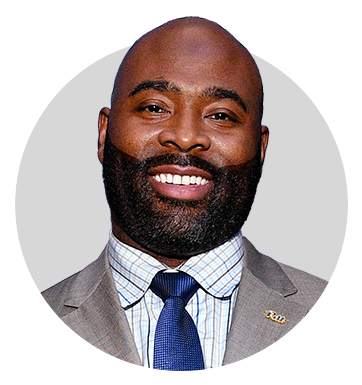 Lousaka Polite, Pitt running back, 1999-2003: He was locked in on a mission, and he was not going to let any distractions prohibit him from achieving greatness.
Roth: First game as a freshman -- the game ends and I see him put a suit on. I go over to him and I say, "Hey Fitz, we only had to wear the suit here. You can wear warmups home." He goes, "If I wear the suit, they're going to know what I'm about from the jump."
Fitzgerald: I was around the professional mindset early on. I knew they were going to prepare me to live my dream and play at the next level. There was no other motive.
It didn't take long for the world to see Fitzgerald's talent. In his second career game, a 14-12 loss to Texas A&M, Fitzgerald had 10 catches for 103 yards.
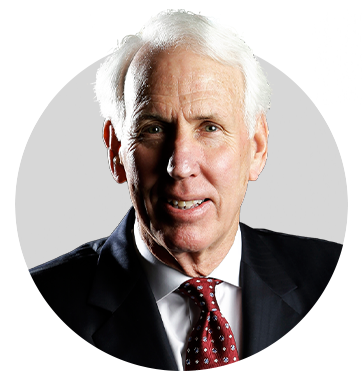 R.C. Slocum, Texas A&M head coach, 1989-2002: You scout and get all the papers, and they were all bragging on this guy who was going to be a great talent. You hear that about a lot of guys, but he was the real deal. ... I saw Peter Warrick at Florida State and Tim Brown at Notre Dame. But Fitzgerald, man -- trying to cover him was just a chore. And he put on a show against us. If you told me who I'd rather defend, it wouldn't be Larry Fitzgerald.
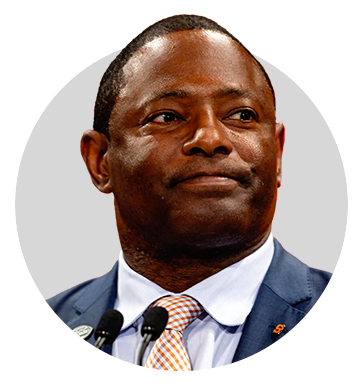 Dino Babers, Texas A&M offensive coordinator, 2001-02; Pitt assistant, 2003: The two guys on him were a first-rounder on his hip and a third-rounder over the top, and the guy is still killing us. We get the ball last and we're going down for a drive to win the game. In the middle of the drive, I start running the ball. R.C. calls up and says, "Dino, why are you calling runs?" I said there was too much time left on the clock, and I don't want to give the ball back to Pitt and watch this receiver come back on us.
Roth: Larry wasn't in base personnel. He went up to Walt and said, "Throw the fade. You know I can make the play." And Walt, literally with his glasses and his call sheet, looks to his left and says, "You know what? You're right."
Babers: After the game, I go up and ask his name and said, "I'm going to remember you. You're a hell of a receiver."
Fitzgerald had a critical catch on fourth-and-5 on a potential tying drive, but Pitt flubbed a 2-point try and lost 14-12. Two weeks later, he caught his first two touchdown passes in a win over Toledo. And on a frigid Saturday in November in Blacksburg, Virginia, Fitzgerald officially arrived as arguably the nation's best receiver with one of his most dominant performances.
Robinson: My cousin is Korey Stringer, who played for the Vikings. When Korey found out that Larry was coming to Pitt, he called me and put the word in. "My guy's coming in as a freshman. His name's Larry. Make sure you look out for him." I say, "Oh, I got you." After about Game 3 or 4, I called Korey and said, "You should have told him to look after me."
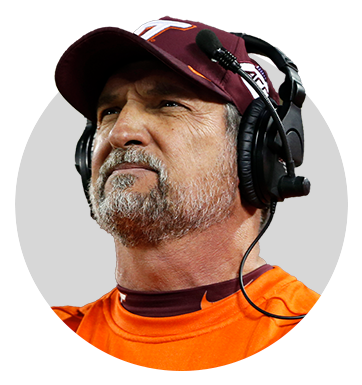 Bud Foster, Virginia Tech defensive coordinator, 1996-2019: We didn't try to do anything special because we had good players at corner, but he was just a handful. He had three touchdowns on us in 2002 when we were No. 3. Then five catches for 105 yards. And the following year had another big game against us, and they upset us again when we were No. 5. He was a nemesis to us, and he haunts me a little bit.
Roth: That was his coming-out party, and from that moment forward, he started taking more of a vocal role on the team. I watched his personality just skyrocket after that.
Rutherford: He was impossible to stop. Once we got inside the 20, we were going to throw a fade, and you could put whoever you wanted out there.
Zeise: No one could stop it. Throw up a jump ball, and it was basically automatic.
LaSala: We played West Virginia when he was a freshman, and Rod hits him in the end zone, and he doesn't make the catch. I wouldn't call it a drop. The kid made a good play on him.
Zeise: That might be the only pass I ever saw him drop. Afterward I asked him about it, and he said, "It's already in my rearview mirror."
LaSala: We had a kid from South Florida named Torrie Cox. A tough Miami Northwestern [High School] kid. Torrie's in the press conference, and someone's trying to grill him on Larry missing that catch, and he's like, "We wouldn't have been in that game if it wasn't for Larry Fitzgerald. Don't talk about him."
Babers: We had a practice my first spring there [in 2003], and I'm with the running backs on the other side of the field, and I hear this "Whoooa," like somebody broke their leg. Everybody was losing it. People are scrambling, cameras are flashing. I'm like, "What's going on? What's going on?" And one of the reporters turns and says, "Larry Fitzgerald just dropped a ball."
Fitzgerald finished his freshman year with 69 catches for 1,005 yards and 12 touchdowns -- including at least one in each of his final six games. The last of those scores, a diving grab against Oregon State in the Insight.com Bowl, was one of his best.
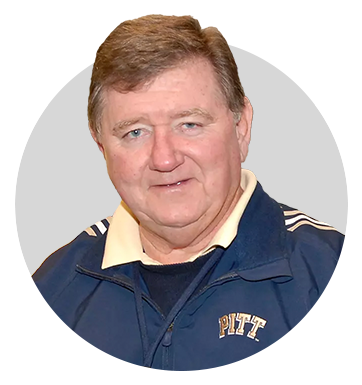 Bill Hillgrove, Pitt radio voice, 1970-present: The Insight Bowl, flat-out airborne, he reached and pulled the ball down in the back of the end zone before he hit the ground. They don't get much better than that one.
Fitzgerald: I was always confident in my ability even if I hadn't been displayed on a big stage. I'd put the work in. I don't feel like the moment was ever too big for me.
Fitzgerald was a burgeoning superstar, but on April 10, 2003, his mother, Carol, who had cancer, died.
Deal: She was an awesome lady. She was the one we had to convince to get Larry [to Pitt], and all she ever said was, "You've got to promise me you're taking care of my son."
Roth: I remember the day he left practice. I can still see it -- somebody coming up and whispering to J.D. Brookhart, and J.D. going up to Larry, and you just saw him whisked away.
 J.D. Brookhart, Pitt assistant, 1997-2003: It puts a pit in my stomach thinking about it right now. Family is such a big part of Larry's life. It was awful. The face, the hurt, the pain. But I think it was very important to him to make his mom proud.
Palko: It knocked him down, man, but he definitely turned his energy into football. We spent hours at the facility together just trying to keep his mind off it.
Blanc: You'd see him in the locker room with guys or standing at the desk talking to the secretaries or in the cafeteria talking to the cooks, and then I'd go to the equipment room, and he'd be over there with the student managers folding towels.
Polite: What do you say to your teammates about losing their mom? You just want to be there for him. So we took turns making sure we were comforting him.
Fitzgerald: I think tragedy -- it does one of two things in a family. It either brings you closer or it tears you apart. And I really believe when you have people who truly care about one another -- and not just for their accomplishments but for the right reasons -- I really feel like it brings you closer. I don't think it would've been the same at any other school.
Fitzgerald's work ethic was never in question, but his mother's death gave him a new motivation.
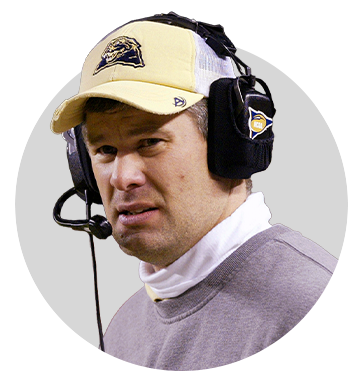 Paul Rhoads, Pitt defensive coordinator, 2000-07: He'd be in my office every week, asking me, "What do you see? What do I give away? What are your guys adjusting to? What are my habits?" He was very serious about it. This was weekly he came in. And it wasn't a casual question. It was a demand: "Make me better. Help me become elite."
Polite: He has more tackles than dropped passes, and I can tell you why that's the case. We'd do easily 100, 120 balls after every practice. Even during training camp. But it would be from all different angles: Over the shoulder, bad-ball drill. Everything.
Roth: He used to tell me, "I know I'm going to go pro." He had this clarity that he knew what he was going to do, and he knew what it took.
LaSala: He played with a broken finger the whole year. A receiver. The best receiver. He never missed a practice.
Palko: No one knew except Larry, the trainers and me. He'd wrap it up for practice, and then in the games, he'd just have his glove on, and no one knew. And he never dropped a ball. It was one of the most impressive things I've ever seen.
Roth: I was his backup. I'd try to come in and get my eight, 10 snaps a game, and he'd be like, "Nah, I'm good." I'd run out on the field and he'd push me back and go, "No man, I can't give you my reps."
Fitzgerald: I didn't want anybody to take my job. And people will take your job.
Zeise: By the time you got to 2003, extraordinary was ordinary for him.
Harris: We had a rule that, if you scored, you always handed the ball back to the ref. Act like you've been there before.
Polite: He would barely cross the goal line before he was handing it to the ref.
Roth: Eventually, he started throwing the ball to the official. He got a kick out of it -- official signals touchdown, arms go up, Larry throws him the ball and it'd hit him in the gut. I bet he'd say, "No, no, I didn't do that."
Fitzgerald is still known as a soft-spoken gentleman of the game, but anyone who went against him understood his persona masked an elite trash-talking game.
LaSala: Larry talked more s--- than anybody. He's the nicest guy in the world and always has a smile on his face, but he was relentless on guys in practice.
Palko: I can confirm he was a good s--- talker. As his roommate, he'd get under my skin a lot.
Fitzgerald: Usually it just came to the top of my mind, and then I'd decide if I'm going to say it or not. Sometimes, it's not even bad things -- just me talking to them about certain things about life and luring them to sleep. Setting the trap.
Polite: He might whisper some things that only he and the defender would hear. He was very strategic in his trash-talking. It was always in a very classy and very demoralizing way.
Robinson: He doesn't do it in a way where he's calling you out in front of people. It's in a smooth way like, "Oh, maybe next time."
Rolle: The first thing I noticed about Larry facing him on the field was that he was probably the most well-mannered competitor. It was friendly battles. Maybe after the whistle he'd punch me in the stomach, but it wasn't done with malicious intent. It was done with playful intent.
Fitzgerald: I knew some guys ran a little hotter than others, so if I could do things or say things -- not in a demonstrative way, but just enough to get under your skin to where you're more focused on me than on the big picture, I was not opposed to doing that.
LaSala: He wore [Virginia Tech's] DeAngelo Hall out. And that kid was a great player.
Foster: We were up 21-7, and we'd just stopped them on a big third down. DeAngelo Hall made a play on Fitzgerald, and [Hall] somehow came up with the ball in his hands, and he threw it at Larry. Fifteen-yard penalty. DeAngelo flips the ball, and it just ignited the fuel on the fire.
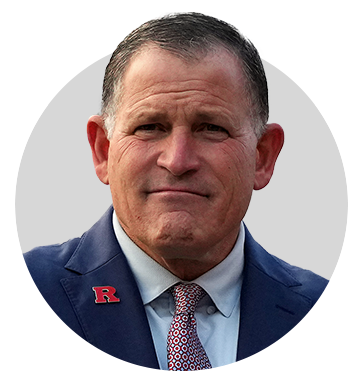 Greg Schiano, Rutgers coach 2001-11, 2020-present: He lit us up. To defend a guy like him you have to have a guy in his face and a guy over the top. You have to dedicate two fully to him. For a half, we didn't do that, and he just torched us.
Polite: In the first half, he just went crazy, and the Rutgers' DBs started fighting with each other. Larry literally had to break the fight up among teammates. Like, "Hey guys, it's going to be OK."
Rutherford: He got into a scuffle at practice with [former Pitt linebacker] J.J. Horne. He comes back to the huddle and says, "I promise y'all, I'll never get in a fight in practice again." He didn't want to exert any extra energy.
Fitzgerald: As soon as they broke up the fight, I got back to the huddle and running routes again, and I was exhausted. I burned so much energy scrapping.
Rutherford: That was the only time I ever saw Larry spent.
Every great season has its "Heisman moment." For Fitzgerald in 2003, that came in a revenge match against Texas A&M in College Station on Sept. 27. He caught seven passes for 135 yards and three touchdowns, including an over-the-shoulder grab between three defenders that announced to the world that Pitt had a genuine Heisman contender.
Rhoads: I don't know if I've been around a better-played game by a receiver than he had that day.
Harris: We always used to kid him about being in shape, and Texas A&M, they had an unbelievable record in September because it was so hot down there in Texas. He came up after he made his catch, he came back to the sideline to me and said, "Coach, do you think I'm in shape?"
Babers: There's a catch that Larry makes in that game that to me is the best catch I've ever seen in college football. And it was not called a catch.
Fitzgerald: I should've had four [touchdowns] that day. They stole that one from me.
Babers: We're in the red zone. We're throwing him a fade ball. You've got a DB tackling him low from the outside. One safety is hitting him high from the inside. Massive collision. I'm thinking the guy's got his leg broke. You have two referees right there, and they both wave it off.
Harris: That's the only time I saw him not give the ball back to the official.
LaSala: If there was replay, it would've counted. But that one was the most miraculous one.
Fitzgerald: I always knew my body. That's one of my biggest attributes. I know where the sideline is -- I have a sixth sense for spatial awareness.
Babers: Larry knows I watch tape really early in the morning, like 6 a.m. Sundays. "When you're in your office tomorrow, and you get to that play, call me. Because I'm telling you right now it was a catch." I'm watching the tape at 6 a.m., and I get to his play, and it was clear on the tape he was in. Check the tape. Pull it up. You'll have Aggies hitting you up saying you're full of crap, and everybody else going, "Dang, that really happened?"
Babers might have his favorite, but narrowing down a single Fitzgerald catch as the all-time best is nearly impossible. There were simply so many to choose from.
Robinson: When the offense was out there, you're supposed to be resting up, but it was hard not to watch Larry.
Palko: He'd frustrate the s--- out of you because you'd be there with one, two, three guys -- that West Virginia game, three guys had an opportunity to make the catch and he comes down, and you watch those guys just look at each other like, "How the f--- did this just happen?" There were six hands vs. two, and he came down with it.
Roth: Virginia Tech, freshman year, down the left sideline. We throw a go ball. The play was 68 choice switch, where you have a choice at the top of the route to take it by the guy with a corner or a post. It's an underthrown ball. Larry sights it, slows down, speeds up, manipulates a defender, and boom, over the outside shoulder, and you're like, "Holy s---."
LaSala: The game at Rutgers -- '03 -- he makes a catch running across the middle that's thrown behind him. He reaches out and makes the catch with one hand and just keeps right on striding.
Brookhart: In practice, we were doing a pat-and-go drill, where the DB runs next to you and you try to catch it outside, away from the DB. Larry's running with one of our DBs, hip to hip, and the ball was thrown outside. He literally tracked it with his left eye. He's peeking, staying square and vertical, running down the field, and the ball dropped over his outside shoulder, and he caught it one-handed, below his waist level and never actually turned to look at it.
Hillgrove: The one thing that separates Larry from any other receiver I've ever seen is that when the ball goes in the air, Larry knows better than anybody where it's coming down.
Fitzgerald: There are guys with better speed or athleticism, but when it came down to being able to catch the ball and really focus in, that's where I excelled.
On Nov. 1, 2003, Fitzgerald caught a halfback pass from Jawan Walker for a touchdown in his 14th consecutive game, setting an NCAA record. He'd find the end zone in his next three games, too, setting the stage for a season finale against Miami with a Big East title, a trip to the Orange Bowl, and perhaps a Heisman Trophy on the line.
LaSala: I've got a picture on my wall in my office from when he set the record for most consecutive games with a touchdown. It's so ironic that it was thrown by a running back.
O'Brien: We didn't really have a lot of big, tall, rangy corners on our team, so that always presented a challenge for us. We tried to do some Cover 2 -- a guy underneath and a guy back, looking to double him up.
Harris: We were having trouble making things happen, and we were -- first, trying to win the game, but also trying to get Larry the record. Quite honestly, I think it was J.D.'s idea.
Brookhart: The records and things, it was an expectation. For him, I don't think it was that special. Maybe after the fact. But he was just doing his job.
Harris: The toughest team we had to play against was Miami, because what they did was they disregarded our run game. They had a corner [Rolle] play bump-and-run and had a safety [Sean Taylor] over the top. And they played that way the whole game.
Rolle: He is the one guy on film that, watching him, I was afraid of. I saw his leaping ability, the timing of his leaping ability, how strong his hands were -- I told myself, "Man, if this guy gets his hands on the ball, it's caught."
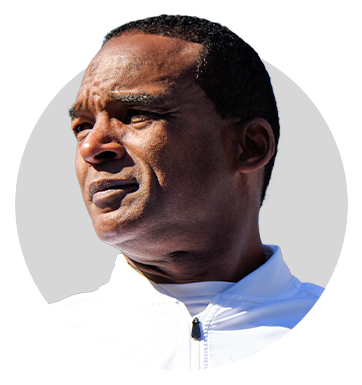 Randy Shannon, Miami defensive coordinator, 2001-06: We thought we had to find a way to take him out of the game plan and not have an ego and say that we were going to put our best guy on him one-on-one.
Rolle: I didn't think we had a chance in hell, but my plan was to not let him touch the ball -- by any means necessary.
Rhoads: I'm a defensive coach, and I was raised by a defensive coach, so you don't go mess with offensive players. But on that night, I went over to [Rod Rutherford] and I said, throw the ball to Larry. And he said, "He's covered, he's covered." And I said, "He's Larry f---ing Fitzgerald."
Zeise: Pitt's problem in that game is it couldn't handle Miami's front seven. Rod Rutherford was running for his life, and Miami had, what, four or five All-Americans in that secondary? But I thought before that game, Larry had already won the Heisman.
Miami held Fitzgerald to three catches for 26 yards and a touchdown and prevailed 28-14 as he extended that NCAA record to 18. However, the overall mediocre stat line in a marquee game likely handed the Heisman to Oklahoma QB Jason White. Fitzgerald finished second.
LaSala: I wouldn't know Jason White if he walked in here. He's probably a nice guy. But Larry was the best player that year, and it's not even close.
Polite: It should've been a slam dunk. Everybody on the planet knew who the best college football player was.
Roth: He comes back to Pitt [after the Heisman ceremony], and I was like, "You took second!" And he's like, "But if you win, it changes your life forever."
Harris: I'm sure he was annoyed, but he had too much class. And he wasn't going to stop at the Heisman Trophy.
Fitzgerald: I think I used it as fuel to reiterate the player I felt like I was. Maybe I might not have had that same chip on my shoulder had I won it.
Rolle: [In the Miami game] he caught a pass, and I made a tackle on him, my hand went through the face mask, and he was bloodied all up. It busted his nose. I didn't know that, but when I went to Arizona [in the NFL], he said, "Man, you cost me the Heisman." And then he said, "And then you busted my nose, too!"
Fitzgerald: I'm not giving Antrel any credit for anything.
Fitzgerald's Pitt career ended with 161 catches, 2,677 yards and 34 touchdowns in just two seasons before he left for the NFL. He was selected third in the 2004 NFL draft by the Arizona Cardinals, and he went on to become the league's second-all-time leading receiver, an 11-time Pro Bowl player and the 2016 Walter Payton Man of the Year. He accomplished it all by remaining the same, relentlessly focused guy he was at Pitt.
Rhoads: Larry was gone before Darrelle Revis came to Pitt, so they were never on the roster together. But they're going to play in the NFL, and Larry calls me early in the week and wants to know about Darrelle. He wants to know what his weaknesses are and how he can beat him. It's like 5 a.m. in Phoenix. I told him, "Fitz, you know I can't do that." "Coach, you know how much I love your boys. You know I was first." He's just trying everything he can to get secrets from me. I checked in with Reve after the game, and I told him what Larry had tried to do. He said, "I know, he came over and told me after the game."
Roth: I was calling games for the Pac-12 Network, and I had an Arizona State game, and I go see him. We're having a good time, and he's got this sick house. It's like 8 o'clock, and he goes, "All right, I'm going to bed." And I'm like, I just got here. And he says, "I gotta get my sleep, man. I'm trying to play for a long time."
Rolle, Fitzgerald's teammate with the Arizona Cardinals, 2005-09: I made the mistake -- I went to Minnesota and worked out with him for a couple days. Bro, he didn't stop. Even when we were done running hills and weight training and doing routes and one-on-one and sprinting, we played like 15 games of one-on-one basketball. I was like, "What the hell do you have in this damn smoothie?" I worked out hard, but that was a different level.
Robinson: It had to be at least three or four years after he was done playing, and we're at the Pitt spring game, and he was ready to line up with me there. I was like, "Man, I haven't played football in 15 years," and he's just like, "I'm gonna still get you." He didn't need a big crowd, but he was going to let you know you were in for a long day.
Foster: When you compete against a guy like that, you know he's special. And I'm glad to see he could carry it on and make defensive coordinators at the next level miserable.
Today, he'll be inducted into the Pro Football Hall of Fame. His father, Larry Sr., who helped set the stage for Fitzgerald's astounding career, died in June, just two months before his son would receive his gold jacket.
Deal: We went to his father's funeral. Pitt had a contingent of us. We're still there for him, and if I needed anything, I know Larry would be there for me. And the first thing I thought of when I received the text [that Larry Sr. had died] was he was a few weeks away from his ultimate dream of seeing his son get inducted into the Hall of Fame. But he's going to have the best seat in the house, and he was a good man.
Brookhart: I'm sure it's tearing him apart, but I think he knows his dad knew all this was going to happen, and Larry made his family proud in all aspects of his life.
Babers: When I was at Pitt, Larry Fitzgerald called me and wished me a happy Father's Day. You might say, what's so special about that? In 40 years of coaching, I've got 117 people I either coached or recruited who played in the NFL. He's the only one that's ever done it.
For the people who knew Fitzgerald during his time at Pitt, his entrance into football immortality speaks to both his tremendous talent, but also the person he was away from the field.
Polite: No one is surprised that he's a first-ballot hall of famer.
Zeise: Larry was at a different level than everybody he played against. A lot has to go right to get to the Hall of Fame, but when he left [Pitt], I knew he was going to be an all-time great.
Hillgrove: When the ball was in the air, Larry knew better than anybody where it's coming down. Now add in his quickness, leaping ability, great hands -- he was almost unbeatable.
Deal: When Larry was inducted into the Pitt Hall of Fame, he, Coach Harris, Tyler Palko and myself -- the four of us played [golf] together. Coach Harris had a hole in one on No. 8, and Larry ran 183 yards down a hill and up a hill to verify what we thought we saw. He was screaming at the bottom, "It's in, it's in, it's in!" Him running 183 yards for Coach Harris was awesome.
Rhoads: I'm at Iowa State as the head coach, and we're playing at the Insight Bowl [in Arizona], practicing at some local high school. Practice is done, and he's hanging around talking to our players. The bowl rep taking me around says, "We've got to go do this." My two young sons are at the practice site, and we don't know what to do with them. Larry says, "Coach, I'll take them." They jump in Larry's truck with him, go to his house, and he hangs out with them all day.
Palko: He's on the board of a couple publicly traded companies. He's an investor. He has his own fund. This is a guy I had to drag to go to class. The circles he walks in now are really impressive, and they have nothing to do with his athletic ability. Athletic ability fades. We all get old. But he's just an impressive human being. He's 10 out of 10, man.
Brookhart: He could run for mayor of Phoenix or governor of Arizona and win. And he'd do a great job.
Polite: He's the best human being I know. Put that in bold print.
Fitzgerald: I just remember the fraternity and how the guys treated one another -- it was truly a brotherhood, and that was special. And it wasn't like that anywhere else. I missed those relationships. Those were my guys, man.
Rutherford: You didn't know at the time you were seeing greatness. But being able to reflect and think, we got to see greatness from the foundation all the way to now. Man, what an experience.